
Mapping the AI Hype

Artificial intelligence has become a pervasive part of everyday life, from auto-generated summaries in search engines to AI-generated content on social media. As its use expands, so do questions and controversies around how AI should be used by companies, individuals, and universities. What is AI, really? What human and environmental costs are obscured behind the black box of AI operations, and can they be addressed? And what is or should be AI's place in higher education?
On February 4, we will kick off a four-part interdisciplinary lecture series scheduled for spring and fall 2026 to explore these questions. Part lesson and part action, the series will help demystify AI and encourage guests to become invested in determining its role in society.
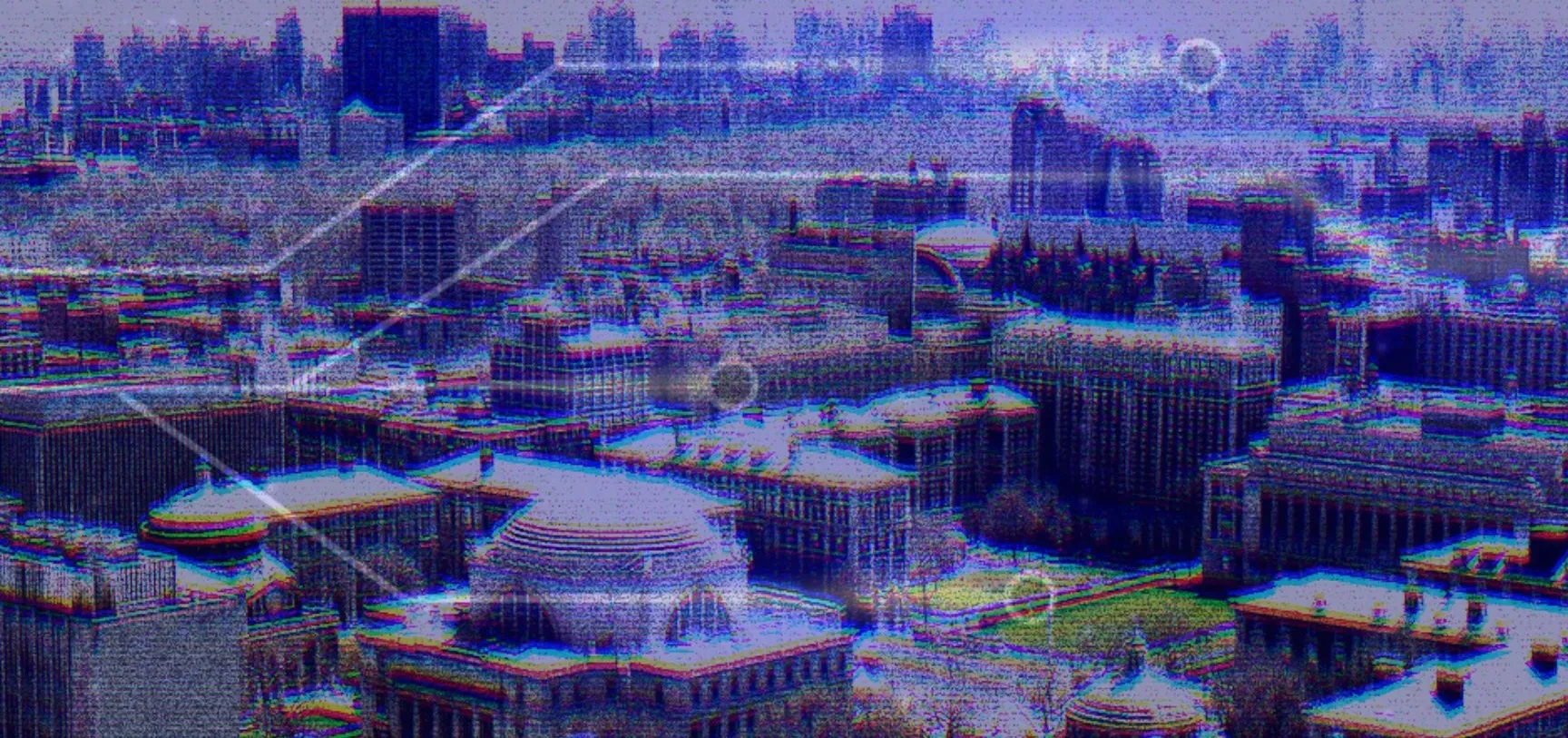
During this event, we'll delve into the realities of AI, distinguishing what it is and what it is not, and examining the hype surrounding it. This discussion will inform a collective mapping activity, as audience members locate AI usage on Columbia’s campus. Scholars, students, and community members are all invited to attend, but registration is required.
Ahead of the first event, we spoke with Madi Whitman, the series organizer and the Director of Undergraduate Students at the Center for Science and Society. She shared her insights into the series' development and her goal of demystifying AI.
Factors include efficiency and dazzling developments. We might approach efficiency in higher ed as a double-edged sword. It's awfully convenient for cost-cutting measures and the austerity mandates of universities in a financially and politically chaotic time. We see this in mass layoffs and investments in technological fixes in which automated tools, including AI, effectively serve as middle managers instead of people, for better and for worse.
The promise of efficiency is present in the classroom, too. Reading and writing are not easy–learning is hard! Generative AI can free up time someone otherwise might have spent on assignments. Various platforms routinely offer me automated comments and assessments to evaluate student work. While it isn't for me, I can understand the appeal. But I think what we ought to ask is what has had to happen for any of these tools to function at all. Where's the labor? What are the energy demands? What are the infrastructural requirements? What positions and voices become invisible? Finally, I think I and others are left wondering what the point of a university is, if teaching and learning become various AI tools responding to and interacting with each other.
An initial question we might ask is if the 'age of AI' should be here, and if we need to integrate AI into our lives at all. No part of AI is inevitable–I argue that elsewhere–and we might start to ask what kinds of AI are permissible and what kinds are not. For example, do we need unprompted AI summaries of assigned texts? Do we need AI clickbait (e.g., commonly referred to as 'slop')? Do we need AI chatbots that make it harder to deal with bureaucratic failures? Where could AI be collectively beneficial? Where and when is it worth the costs?
Mapping will be an experiment! We will make a physical, paper map of sites of AI use in order to broaden out not only what we think of as AI but also surface otherwise invisible or mundane places of use. For example, the adoption of platforms with AI components (which offices support these?), classroom use of chatbots, surveillance infrastructures… It should be an eye-opening experience that allows us to better understand the scale of use. We'll build on this map in the remaining workshops to layer on other dimensions of AI.
The hope of the series is that attendees will be better equipped to converse about AI both at the university and in other areas of their lives. If we more collectively understand the differences in how specific technologies operate and where they came from, we can be more discerning about use and what we might want from increasingly powerful companies and institutions that are making these decisions for us.
Be sure to join us on February 4 at 5pm for Mapping AI: Hype! Registration is required. This event is free and open to the public, but in-person guests without an active Columbia University ID must register by 4pm on February 3.
And stay tuned for the next two events in this series: Mapping AI: Labor on March 4 and Mapping AI: Power on April 22.
This event is supported by the Institute for Social and Economic Research and Policy at Columbia University.
Enjoyed this story? Stay connected via our newsletter. Sign up for twice-monthly updates featuring upcoming events, opportunities, and stories from our community.