
The Indigenous Knowledge Holders Residencies flip the traditional model of academic research.
Rather than researchers visiting a community to gather knowledge that will be analyzed and interpreted at their university, the Residencies invite Indigenous knowledge holders to Columbia University for sustained exchange with students, scholars, and audiences across the university.
This approach builds on the Center’s commitment to co-production of knowledge. Traditional models of academic research often position community members as participants rather than partners. Co-production works to redistribute power. It requires deep collaboration and trust built over time between community partners and researchers to collectively set the research agenda, create knowledge and determine how that work is put into action.
The Residencies extend this approach by flipping the direction of exchange. Bringing Indigenous knowledge holders to Columbia creates opportunities for the wider University community to encounter knowledge systems and embodied ways of learning and knowing that are often excluded from text-centered academic environments.
Each Residency is designed and led by a partnership between a Columbia University faculty member and their existing community collaborator. While activities vary, Residencies typically combine public events, smaller targeted discussions, and presentations and conversations with classes.
The Center for Science and Society fosters reciprocal exchange between Indigenous knowledge holders and Columbia through these Residencies. They encourage students, scholars, and members of the public to see connections across seemingly unrelated subjects while engaging with forms of expertise and experience that are often undervalued in academia.
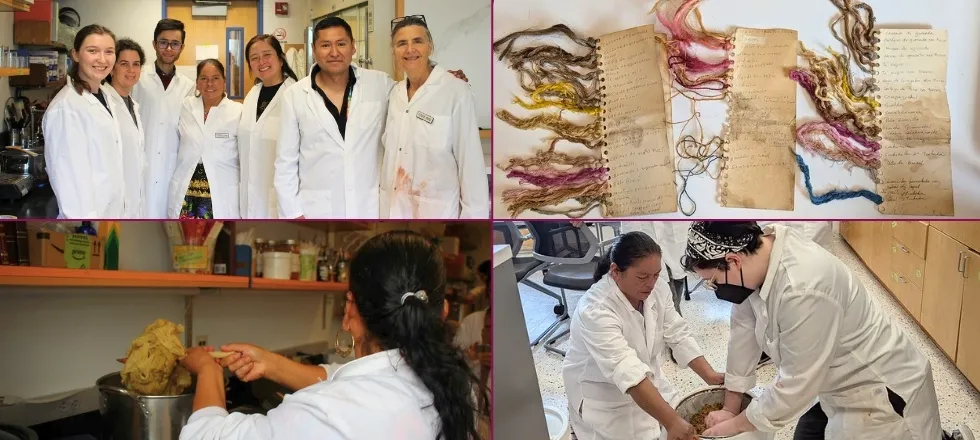
Bertha Estrada Huipe and her son Mateo joined the Making and Knowing Project to share the environmental, cultural, chemical, historical, and tacit knowledge embedded in Indigenous dyeing traditions. Working directly with students through hands-on instruction in natural dyeing techniques, they brought these interconnected forms of knowledge into the laboratory.
- September 28-October 8, 2024
- Geographic Focus: Michoacán, Mexico
- Indigenous Knowledge Holders
- Bertha Estrada Huipe, expert dyer-weaver
- Her son, Mateo Rodriguez Estrada, expert-dyer weaver
- Faculty Host: Pamela Smith, Founding Director of the Center for Science and Society and Seth Low Professor of History at Columbia University
- Events
- Making and Knowing Dyeing Showcase on October 4, 2024
- Other Activities
- Four laboratory sessions in the Making and Knowing Project lab, where students learned natural dyeing techniques
- Class visit
- Presented at the Columbia Latin American History Workshop meeting for graduate students
- Research visit to the Department of Textile Conservation at the Metropolitan Museum of Art
- Co-Sponsors
- Columbia Climate School
- Henry Luce Foundation
This residency examined the intersection of conservation, cultural practices, and Indigenous sovereignty in Papua New Guinea. Papua New Guinea has long served as a scientific research site, often extracting knowledge and data from Indigenous land and communities. Participants explored avenues for reclaiming Indigenous control through training, local institutions, and community-led conservation efforts.
- March 31-April 11, 2025
- Geographic Focus: Papua New Guinea
- Indigenous Knowledge Holder: Miriam Supuma, Programme Manager at Synchronicity Earth
- Faculty Host: Paige West, Claire Tow Professor of Anthropology at Columbia University
- Events
- Indigenous Sovereignty in Science and Data: Histories and Futures in New Guinea and Hawai‘i on April 3, 2025
- Creating Knowledge and Activism in Papua New Guinea on April 7, 2025
- Supporting Indigenous-led Conservation in Papua New Guinea on April 8, 2025
- Other Activities
- Archive research at the American Museum of Natural History
- Research visits to the Bronx Zoo and Cary Institute
- Informal mixer with invited junior scholars and graduate students
- Class visits
- Co-Sponsors
- Center for Biodiversity and Conservation at the American Museum of Natural History
- Columbia Climate School
- Department of Anthropology at Columbia University
- Henry Luce Foundation
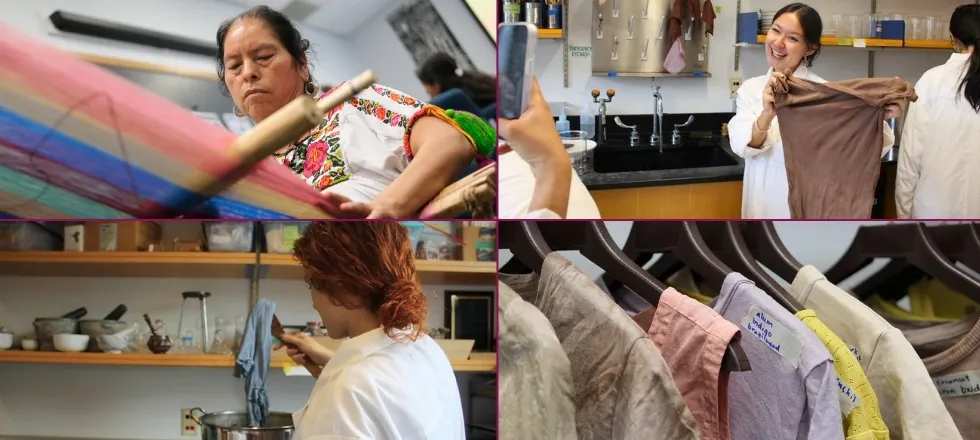
Building on the 2024 Indigenous Dyeing Residency, this expanded residency at the Making and Knowing Project explored textile history and practices across Mexico. Participants examined the connections between local environments, the embodied skills and knowledge they cultivate, and their expression in Indigenous languages and cultural practices. Special attention was given to the environmental harm of the contemporary textile industry.
- October 1-10, 2025
- Geographic Focus: Michoacán, Mexico
- Indigenous Knowledge Holders
- Bertha Estrada Huipe, expert dyer-weaver
- Her son, Mateo Rodriguez Estrada, expert-dyer weaver
- Faculty Host: Pamela Smith, Founding Director of the Center for Science and Society and Seth Low Professor of History at Columbia University
- Events
- Revitalization of Indigenous Languages and Arts Across the Americas on October 3, 2025
- Dyeing and the Environment on October 9, 2025
- Dyeing and Weaving Showcase on October 10, 2025
- Other Activities
- Six laboratory sessions in the Making and Knowing Project lab, where students learned natural dyeing techniques
- Backstrap loom weaving demonstrations and mini-weaving lessons
- Research visit to the Department of Textile Conservation at the Metropolitan Museum of Art
- Class visit
- Creation of a video archive
- Co-Sponsors
- Institute of Latin American Studies at Columbia University
- Institute for Religion, Culture and Public Life at Columbia University
- Institute for Social and Economic Research and Policy at Columbia University
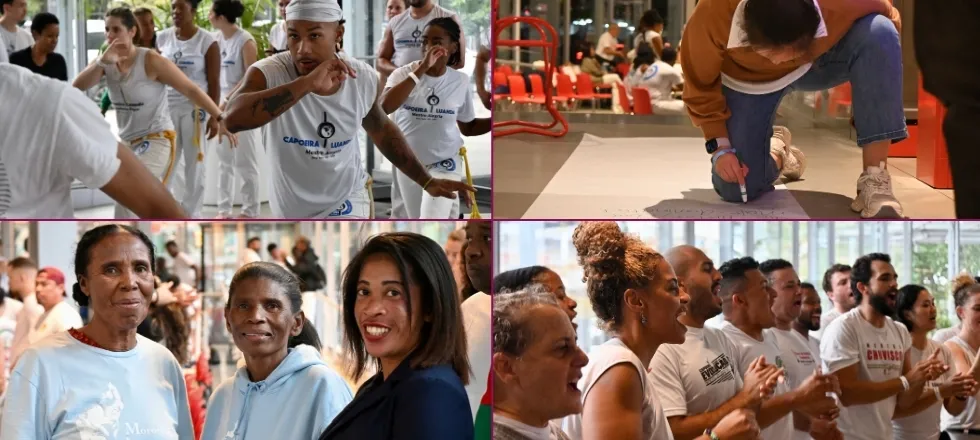
This residency considered how intergenerational and ecological knowledge are shaped and shared through music, movement, and storytelling in Madagascar. While archaeological sites are vital to historical climate research, social memory embedded in music and oral traditions is an equally powerful research means for transmitting generations of climate adaptation and resilience into contemporary place-based responses.
- October 9-29, 2025
- Geographic Focus: Andavadoaka, Madagascar
- Indigenous Knowledge Holders
- Felicia Fenomanana, Vaevae team member
- Banote Marie Madeleine, Morombe Archaeological Project team member
- Jean Christophe Romain, Morombe Archaeological Project team member
- Roger Samba, Vaevae team member
- Laurine Tahirisoa, Morombe Archaeological Project team member
- Roby Noel Zafy, Morombe Archaeological Project team member
- Faculty Host: Kristina Douglass, Associate Professor of Climate at Columbia University
- Events
- Vem Camarada XIII: Arts, Ancestry, and Adaptation: Capoeira, Social Memory, and Climate Resilience Across Oceans from October 9-11, 2025
October 9-11 - Bridging the Gap: Co-producing Climate Research on October 13
- Vem Camarada XIII: Arts, Ancestry, and Adaptation: Capoeira, Social Memory, and Climate Resilience Across Oceans from October 9-11, 2025
- Other Activities
- Presentation at Columbia Climate School
- Research visits to the Lamont Doherty Earth Observatory
- Research visit to the American Museum of Natural History
- Class visit
- Collaborative work on upcoming scholarly publications about co-produced research with the faculty host
- Co-Sponsors
- Columbia Climate School